
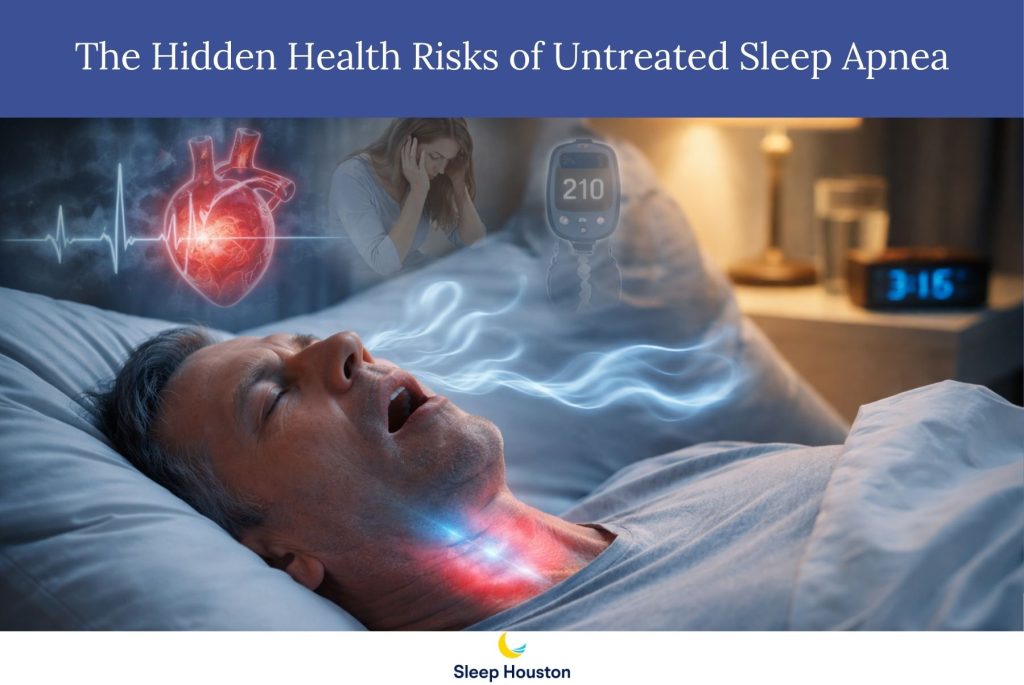
Sleep is one of the most essential pillars of good health, yet millions of people suffer silently from sleep disorders—especially sleep apnea. Often undiagnosed or untreated, sleep apnea can have serious, far-reaching consequences beyond poor sleep quality. At Sleep Houston Sleep and TMJ Therapy, we specialize in identifying and treating sleep apnea and TMJ disorders to help patients reclaim their health, energy, and quality of life.
What Is Sleep Apnea?
Sleep apnea is a sleep-related breathing disorder in which breathing repeatedly stops and starts throughout the night. These interruptions reduce oxygen levels in the blood and force the brain to briefly wake the body to resume breathing—often without the person realizing it.
The most common form is obstructive sleep apnea (OSA), which occurs when the airway becomes partially or completely blocked during sleep due to relaxed throat muscles, jaw position, or soft tissue collapse.
Why Sleep Apnea Often Goes Untreated
Many people dismiss symptoms such as snoring, fatigue, or morning headaches as minor inconveniences or normal signs of aging. Others may avoid treatment because they believe CPAP therapy is their only option. Unfortunately, untreated sleep apnea doesn’t just affect sleep—it can quietly damage your overall health.
The Hidden Health Risks of Untreated Sleep Apnea
1. Cardiovascular Disease
Untreated sleep apnea significantly increases the risk of:
- High blood pressure (hypertension)
- Heart attacks
- Stroke
- Irregular heart rhythms (arrhythmias)
Repeated oxygen deprivation places chronic stress on the cardiovascular system, forcing the heart to work harder throughout the night.
2. Type 2 Diabetes
Sleep apnea is closely linked to insulin resistance. Poor oxygen levels and fragmented sleep can interfere with how the body processes glucose, increasing the risk of developing type 2 diabetes or making existing diabetes harder to control.
3. Daytime Fatigue and Cognitive Impairment
Interrupted sleep prevents the body from reaching restorative sleep stages. This can lead to:
- Excessive daytime sleepiness
- Memory problems
- Difficulty concentrating
- Decreased productivity
- Increased risk of workplace and driving accidents
4. Mental Health Issues
Untreated sleep apnea has been associated with:
- Depression
- Anxiety
- Mood swings
- Irritability
Chronic sleep deprivation disrupts neurotransmitters and stress hormones that regulate emotional well-being.
5. Weight Gain and Metabolic Issues
Sleep apnea alters hormones responsible for appetite control, often increasing cravings for high-calorie foods. This creates a vicious cycle, as weight gain can further worsen airway obstruction.
6. TMJ Disorders and Jaw Pain
Many patients with sleep apnea clench or grind their teeth at night (bruxism), placing excessive stress on the jaw joints. Over time, this can lead to TMJ disorder, facial pain, headaches, and jaw dysfunction—conditions we frequently treat at Sleep Houston Sleep and TMJ Therapy.
Effective, Comfortable Treatment Options
At Sleep Houston Sleep and TMJ Therapy, we offer custom oral appliance therapy as a comfortable, effective alternative to CPAP for many patients. These FDA-approved oral devices gently reposition the jaw and tongue to keep the airway open throughout the night—while also helping reduce jaw strain and TMJ symptoms.
Comprehensive Q&A: Sleep Apnea and Treatment
Q: How do I know if I have sleep apnea?
A: Common signs include loud snoring, gasping or choking during sleep, excessive daytime fatigue, morning headaches, dry mouth, and difficulty concentrating. A sleep study is required for diagnosis.
Q: Is snoring always a sign of sleep apnea?
A: Not always, but chronic, loud snoring—especially when combined with daytime fatigue—is a strong indicator that sleep apnea may be present.
Q: What happens if sleep apnea is left untreated?
A: Untreated sleep apnea can lead to serious health complications, including heart disease, stroke, diabetes, depression, memory loss, and increased accident risk.
Q: Do I have to use a CPAP machine?
A: Not necessarily. Many patients qualify for oral appliance therapy, which is quieter, portable, and easier to use. We evaluate each patient individually to determine the best treatment option.
Q: Can oral appliances help with TMJ pain?
A: Yes. Properly designed oral appliances can reduce nighttime clenching and grinding, helping alleviate TMJ pain while also improving breathing during sleep.
Q: Is oral appliance therapy comfortable?
A: Most patients find oral appliances very comfortable after a short adjustment period. They are custom-made to fit your mouth precisely.
Q: Does insurance cover sleep apnea treatment?
A: Many medical insurance plans cover sleep apnea diagnosis and oral appliance therapy. Our team can help guide you through the process.
Take Control of Your Sleep and Health
Sleep apnea is not just a sleep problem—it’s a serious health condition that deserves proper attention and treatment. If you or a loved one is experiencing symptoms, early intervention can dramatically improve both sleep quality and long-term health outcomes.
At Sleep Houston Sleep and TMJ Therapy, we are dedicated to providing personalized, non-invasive solutions that help you breathe better, sleep deeper, and live healthier.
Contact Information
Sleep Houston Sleep and TMJ Therapy
📍 9099 Katy Freeway, Suite 100
Houston, TX 77024
📞 Phone: (713) 828-8587
🌐 Website: https://www.sleephouston.com