
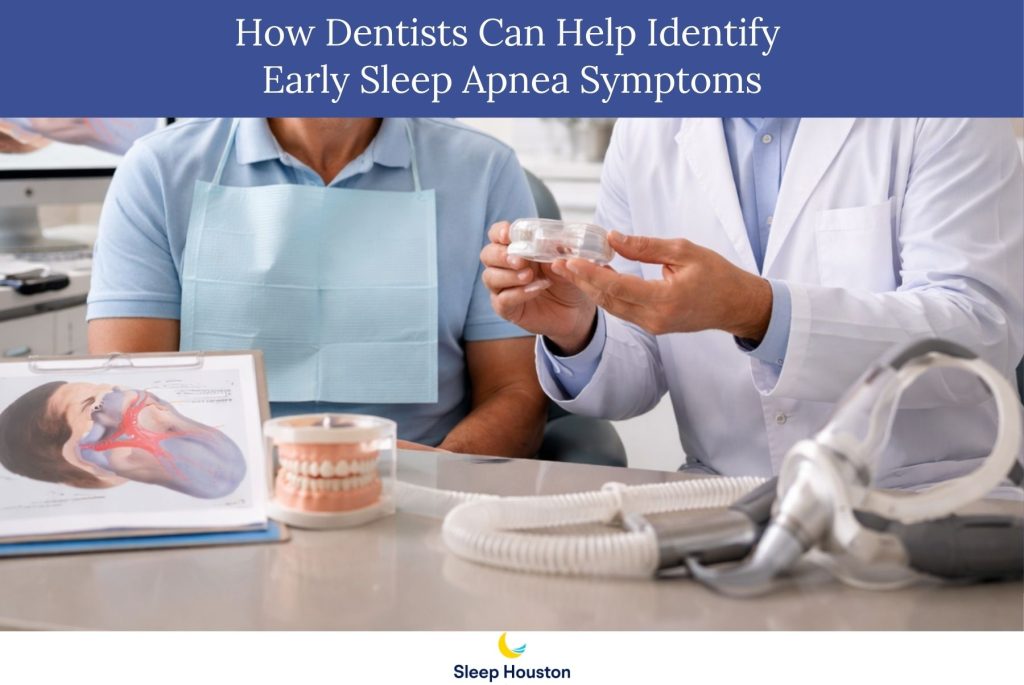
Sleep apnea is a serious but often undiagnosed condition that affects millions of Americans. While many people associate sleep apnea diagnosis with sleep specialists or primary care physicians, dentists play a critical and often overlooked role in identifying early signs of sleep apnea—sometimes before patients even realize there is a problem.
At Sleep Houston Sleep and TMJ Therapy, our team is uniquely trained to recognize oral and facial indicators of sleep-disordered breathing and help patients take early action toward better sleep and overall health.
Understanding Sleep Apnea
Sleep apnea is a sleep disorder characterized by repeated interruptions in breathing during sleep. The most common type, obstructive sleep apnea (OSA), occurs when the airway collapses or becomes blocked while sleeping. These interruptions can happen dozens or even hundreds of times per night, reducing oxygen levels and preventing restorative sleep.
If left untreated, sleep apnea can increase the risk of:
- High blood pressure
- Heart disease and stroke
- Diabetes
- Daytime fatigue and accidents
- Depression and cognitive issues
Early identification is key—and that’s where dentists come in.
Why Dentists Are Well-Positioned to Detect Sleep Apnea
Dentists routinely examine areas of the body that are directly involved in airway health. During regular dental visits, we assess the jaw, tongue, throat, bite alignment, and oral tissues—many of which can reveal early warning signs of sleep apnea.
Because patients often see their dentist more regularly than their physician, dentists may be the first healthcare providers to notice red flags.
Early Sleep Apnea Signs Dentists Look For
At Sleep Houston Sleep and TMJ Therapy, we evaluate a range of oral and facial indicators, including:
1. Jaw and Bite Structure
- Recessed or small lower jaw
- Narrow dental arches
- Misaligned bite (malocclusion)
These features can restrict the airway and increase the likelihood of obstruction during sleep.
2. Tongue and Throat Characteristics
- Large tongue (macroglossia)
- Scalloped or indented tongue edges
- Enlarged tonsils or uvula
3. Teeth Grinding and Clenching (Bruxism)
Chronic grinding is often the body’s response to airway obstruction and oxygen deprivation during sleep.
4. TMJ Disorders and Facial Pain
Jaw pain, headaches, and clicking joints are frequently associated with sleep-disordered breathing.
5. Dry Mouth and Worn Teeth
Mouth breathing at night—common in sleep apnea patients—can cause dry mouth, tooth wear, and increased cavity risk.
How Dentists Help After Identifying Risk
If we identify signs of possible sleep apnea, we take a collaborative and patient-centered approach:
- Conduct a detailed sleep and health screening
- Coordinate with sleep physicians for sleep testing
- Review results and discuss treatment options
- Provide custom oral appliance therapy when appropriate
Oral appliances are a comfortable, non-invasive alternative to CPAP for many patients with mild to moderate obstructive sleep apnea.
The Role of Oral Appliance Therapy
Oral appliances are custom-made dental devices worn during sleep. They work by:
- Gently repositioning the lower jaw
- Preventing airway collapse
- Improving airflow and oxygen levels
Many patients find oral appliances easier to use and more comfortable than CPAP machines, leading to better long-term compliance.
Comprehensive Q&A: Dentists and Sleep Apnea
Q: Can a dentist diagnose sleep apnea?
A: Dentists do not officially diagnose sleep apnea, but they can identify risk factors and refer patients for a sleep study through a physician or sleep specialist.
Q: What symptoms should prompt me to ask my dentist about sleep apnea?
A: Loud snoring, morning headaches, jaw pain, daytime fatigue, teeth grinding, dry mouth, or waking up gasping for air are all important symptoms to mention.
Q: Is snoring always a sign of sleep apnea?
A: Not always, but chronic, loud snoring—especially when combined with other symptoms—can be a strong indicator of obstructive sleep apnea.
Q: How effective are oral appliances for sleep apnea?
A: Oral appliances are highly effective for many patients with mild to moderate OSA and for those who cannot tolerate CPAP therapy.
Q: Will insurance cover dental sleep apnea treatment?
A: Many medical insurance plans provide coverage for sleep apnea treatment, including oral appliances. Our office helps patients navigate insurance and documentation.
Q: Can children have sleep apnea?
A: Yes. Dentists can also identify airway issues in children, such as narrow palates or enlarged tonsils, which may affect sleep and development.
Why Early Detection Matters
Identifying sleep apnea early can dramatically improve quality of life and reduce long-term health risks. Dentists trained in dental sleep medicine are a powerful first line of defense in catching symptoms before complications develop.
At Sleep Houston Sleep and TMJ Therapy, we are committed to helping patients breathe better, sleep deeper, and live healthier lives.
Contact Information
Sleep Houston Sleep and TMJ Therapy
9099 Katy Freeway, Suite 100
Houston, TX 77024
📞 Phone: (713) 828-8587
🌐 Website: https://www.sleephouston.com