
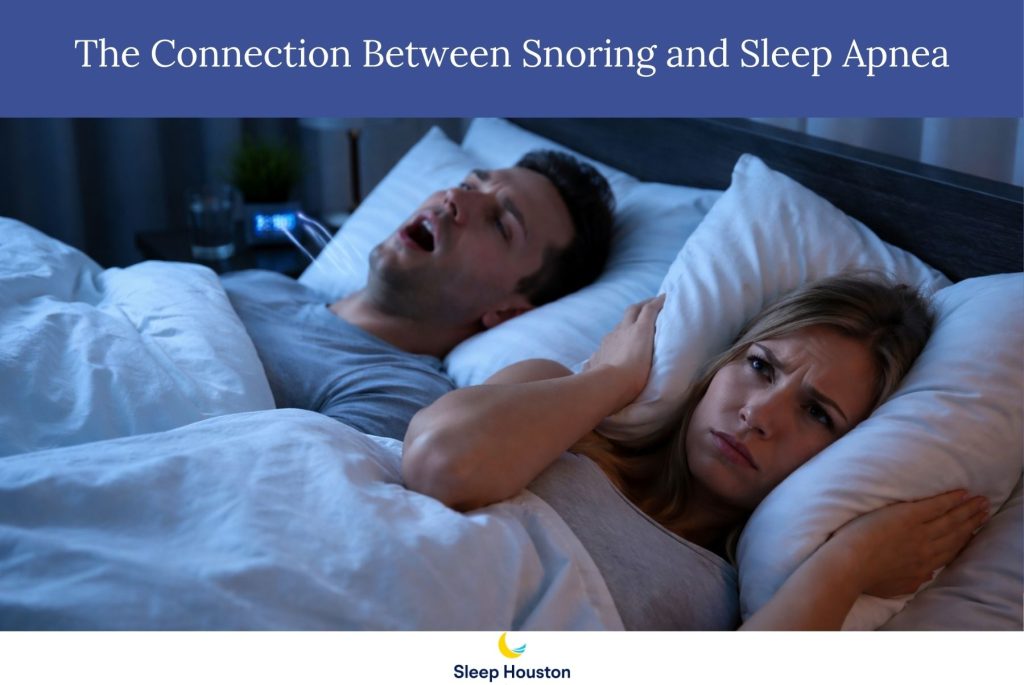
Snoring is often brushed off as an annoying but harmless nighttime habit. However, for many individuals, snoring can be a warning sign of a much more serious condition—sleep apnea. Understanding the connection between snoring and sleep apnea is essential for protecting your health, improving sleep quality, and preventing long-term complications.
At Sleep Houston Sleep and TMJ Therapy, we specialize in identifying the root causes of snoring and sleep-disordered breathing and providing effective, non-invasive treatment solutions to help patients breathe—and sleep—better.
What Is Snoring?
Snoring occurs when airflow is partially blocked as it passes through the airway during sleep. This blockage causes the surrounding tissues in the throat to vibrate, producing the familiar snoring sound.
Common contributors to snoring include:
- Relaxation of throat muscles during sleep
- Nasal congestion or obstruction
- Obesity or excess tissue around the neck
- Alcohol consumption before bed
- Sleeping on the back
While occasional snoring may be harmless, chronic or loud snoring can indicate an underlying sleep disorder.
What Is Sleep Apnea?
Sleep apnea is a serious sleep disorder in which breathing repeatedly stops and starts during sleep. The most common type is obstructive sleep apnea (OSA), which occurs when the airway collapses or becomes blocked.
Key characteristics of sleep apnea include:
- Repeated pauses in breathing
- Drops in oxygen levels during sleep
- Frequent nighttime awakenings (often unnoticed)
- Disrupted sleep cycles
Left untreated, sleep apnea can significantly impact overall health and quality of life.
How Are Snoring and Sleep Apnea Connected?
Not everyone who snores has sleep apnea—but most people with sleep apnea snore. Snoring is often one of the earliest and most noticeable signs of obstructive sleep apnea.
Key Differences Between Snoring and Sleep Apnea
| Snoring | Sleep Apnea |
| Caused by partial airway blockage | Caused by repeated airway collapse |
| Usually continuous noise | Snoring with pauses, gasping, or choking |
| May be harmless | Can be life-threatening if untreated |
If snoring is accompanied by breathing pauses, choking sounds, or excessive daytime sleepiness, it is important to seek professional evaluation.
Health Risks of Untreated Sleep Apnea
Sleep apnea affects more than just your sleep—it impacts your entire body. Potential complications include:
- High blood pressure
- Heart disease and stroke
- Type 2 diabetes
- Memory and concentration problems
- Mood disorders such as depression and anxiety
- Increased risk of accidents due to fatigue
Early diagnosis and treatment can significantly reduce these risks.
How Sleep Houston Sleep and TMJ Therapy Can Help
At Sleep Houston Sleep and TMJ Therapy, we take a comprehensive, personalized approach to treating snoring and sleep apnea. Our focus is on comfortable, non-surgical solutions, especially for patients who struggle with CPAP therapy.
Our Treatment Options Include:
- Custom oral appliance therapy to keep the airway open
- Evaluation and management of jaw position and TMJ-related airway issues
- Collaboration with sleep physicians for sleep testing and diagnosis
- Ongoing monitoring to ensure optimal results
Our oral appliances are discreet, portable, and designed for long-term comfort and effectiveness.
Comprehensive Q&A: Snoring and Sleep Apnea
Q: Is loud snoring always a sign of sleep apnea?
A: No, but loud, chronic snoring—especially when paired with breathing pauses or gasping—should be evaluated by a sleep professional.
Q: Can thin or healthy individuals have sleep apnea?
A: Yes. While weight can be a risk factor, sleep apnea can occur due to jaw structure, airway anatomy, or muscle relaxation during sleep.
Q: How do I know if I stop breathing during sleep?
A: Often, a bed partner notices it first. Other signs include waking up gasping for air, morning headaches, and excessive daytime fatigue.
Q: What are oral appliances, and how do they work?
A: Oral appliances are custom-made dental devices that gently reposition the jaw to keep the airway open during sleep, reducing snoring and apnea events.
Q: Are oral appliances comfortable?
A: Yes. Most patients find them far more comfortable and easier to use than CPAP machines.
Q: Can sleep apnea be cured?
A: While it may not always be “cured,” sleep apnea can be effectively managed with proper treatment, significantly improving sleep quality and health outcomes.
Q: When should I seek treatment?
A: If snoring is persistent, loud, or associated with fatigue, headaches, or breathing pauses, it’s time to schedule an evaluation.
Take the First Step Toward Better Sleep
Snoring is more than just a nighttime nuisance—it may be your body’s way of signaling a serious health issue. Early diagnosis and proper treatment can dramatically improve your sleep, energy, and overall well-being.
At Sleep Houston Sleep and TMJ Therapy, we are committed to helping you achieve healthier, more restful sleep through expert care and proven solutions.
Contact Information
Sleep Houston Sleep and TMJ Therapy
📍 9099 Katy Freeway, Suite 100
Houston, TX 77024
📞 Phone: (713) 828-8587
🌐 Website: https://sleephouston.com