
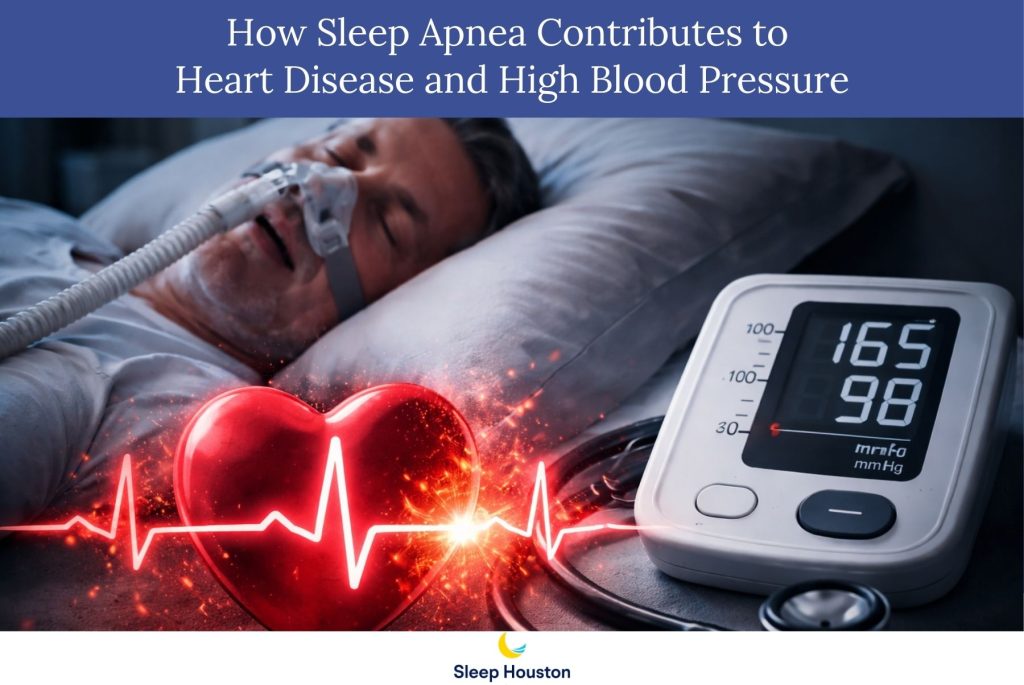
Sleep is one of the most powerful regulators of overall health—yet millions of people unknowingly suffer from sleep apnea, a serious sleep disorder that can quietly damage the heart and cardiovascular system. At Sleep Houston Sleep and TMJ Therapy, we help patients understand the connection between sleep apnea, heart disease, and high blood pressure, and offer effective, non-invasive treatment options to protect long-term health.
Understanding Sleep Apnea
Sleep apnea is a condition in which breathing repeatedly stops and starts during sleep. The most common form, obstructive sleep apnea (OSA), occurs when the airway collapses or becomes blocked, reducing oxygen flow to the body.
Common symptoms include:
- Loud, chronic snoring
- Gasping or choking during sleep
- Excessive daytime fatigue
- Morning headaches
- Difficulty concentrating
Many people dismiss these symptoms as minor sleep issues, but untreated sleep apnea can have serious—and even life-threatening—consequences.
The Link Between Sleep Apnea and Heart Disease
Sleep apnea places significant stress on the cardiovascular system. Each time breathing stops, oxygen levels drop, triggering the body’s “fight-or-flight” response. Over time, this repeated stress can contribute to heart disease in several ways:
1. Reduced Oxygen Levels
Repeated oxygen deprivation damages blood vessels and increases inflammation, both of which raise the risk of coronary artery disease and heart attacks.
2. Increased Heart Strain
Sleep apnea forces the heart to work harder throughout the night, increasing the risk of:
- Heart enlargement
- Irregular heart rhythms (arrhythmias)
- Heart failure
3. Higher Risk of Heart Attack and Stroke
Studies show that untreated sleep apnea significantly increases the risk of heart attack and stroke, particularly in individuals with existing cardiovascular conditions.
How Sleep Apnea Causes High Blood Pressure
High blood pressure (hypertension) is one of the most common and dangerous complications of sleep apnea.
Here’s why:
- Oxygen drops during apnea episodes cause blood vessels to constrict
- Stress hormones like adrenaline are released repeatedly during sleep
- Blood pressure remains elevated even during waking hours
Over time, this constant elevation can make high blood pressure more difficult to control—even with medication.
Why Early Diagnosis Matters
Sleep apnea often goes undiagnosed because it occurs during sleep. However, early diagnosis and treatment can:
- Lower blood pressure naturally
- Reduce strain on the heart
- Improve sleep quality and daytime energy
- Decrease the risk of serious cardiovascular events
At Sleep Houston Sleep and TMJ Therapy, we focus on identifying sleep apnea early and offering personalized treatment options that fit your lifestyle.
Oral Appliance Therapy: A Heart-Healthy Solution
Many patients are surprised to learn that sleep apnea can often be treated without CPAP. Oral appliance therapy, provided by trained dental sleep medicine professionals, is a comfortable and effective alternative for many patients.
Benefits of Oral Appliance Therapy:
- Keeps the airway open during sleep
- Comfortable, quiet, and portable
- Improves oxygen levels
- Helps lower blood pressure and cardiovascular risk
Our team custom-designs oral appliances to improve airflow, reduce apnea events, and protect your heart health.
Comprehensive Q&A: Sleep Apnea, Heart Disease, and Blood Pressure
Q: Can sleep apnea really cause heart disease?
A: Yes. Untreated sleep apnea significantly increases the risk of heart disease, heart attacks, arrhythmias, and heart failure due to repeated oxygen deprivation and cardiovascular stress.
Q: Does sleep apnea cause high blood pressure or just worsen it?
A: Sleep apnea can both cause and worsen high blood pressure. Many patients find their blood pressure improves once sleep apnea is properly treated.
Q: Can treating sleep apnea lower my blood pressure?
A: In many cases, yes. Effective sleep apnea treatment can reduce nighttime and daytime blood pressure and improve overall heart health.
Q: I don’t snore—could I still have sleep apnea?
A: Absolutely. While snoring is common, not all patients with sleep apnea snore. Fatigue, headaches, and poor sleep quality are also warning signs.
Q: Is CPAP the only treatment for sleep apnea?
A: No. Oral appliance therapy is a proven alternative for many patients with mild to moderate sleep apnea or those who cannot tolerate CPAP.
Q: How do I know if I need treatment?
A: A proper sleep evaluation is essential. Our team works with sleep physicians and diagnostic testing to determine the best course of care.
Take Control of Your Sleep and Heart Health
Sleep apnea is more than a sleep disorder—it’s a serious medical condition that affects your heart, blood pressure, and overall quality of life. The good news is that effective, comfortable treatment options are available.
At Sleep Houston Sleep and TMJ Therapy, we are dedicated to helping patients sleep better, breathe easier, and protect their cardiovascular health.
Contact Information
Sleep Houston Sleep and TMJ Therapy
9099 Katy Freeway, Suite 100
Houston, TX 77024
📞 Phone: (713) 828-8587
🌐 Website: sleephouston.com