
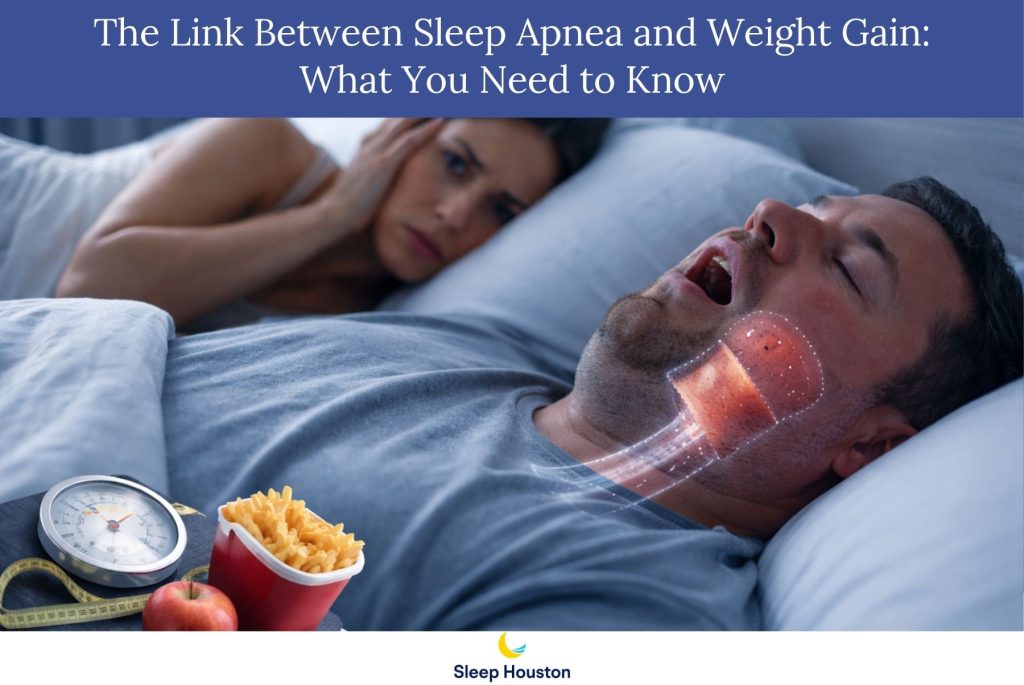
Sleep apnea and weight gain are closely connected in ways that many people don’t realize. If you struggle with poor sleep, daytime fatigue, or unexplained weight changes, obstructive sleep apnea (OSA) may be playing a significant role. At Sleep Houston Sleep and TMJ Therapy, we help patients understand this connection and provide effective, non-invasive treatment options that improve sleep quality, overall health, and long-term well-being.
Understanding how sleep apnea and weight influence one another is a critical step toward better health.
Understanding Sleep Apnea
Sleep apnea is a serious sleep disorder in which breathing repeatedly stops and starts during sleep. The most common form, obstructive sleep apnea (OSA), occurs when the airway collapses or becomes blocked, reducing oxygen levels and disrupting restorative sleep.
Common symptoms include:
- Loud or chronic snoring
- Gasping or choking during sleep
- Excessive daytime sleepiness
- Morning headaches
- Difficulty concentrating
- Mood changes or irritability
Left untreated, sleep apnea can increase the risk of heart disease, high blood pressure, diabetes, and weight gain.
How Sleep Apnea Contributes to Weight Gain
Sleep apnea doesn’t just affect how well you sleep—it also disrupts your metabolism and hormones, making weight gain more likely.
1. Hormonal Imbalance
Poor sleep alters hunger-regulating hormones:
- Ghrelin (hunger hormone) increases
- Leptin (satiety hormone) decreases
This imbalance leads to increased appetite, cravings (especially for carbohydrates), and overeating.
2. Insulin Resistance
Interrupted sleep reduces insulin sensitivity, making it harder for your body to regulate blood sugar. Over time, this can contribute to fat storage and increase the risk of type 2 diabetes.
3. Reduced Energy and Activity
Chronic fatigue caused by sleep apnea makes regular exercise more difficult. When energy levels are low, people tend to be less physically active, contributing to weight gain.
4. Elevated Stress Hormones
Sleep deprivation increases cortisol, a stress hormone linked to abdominal fat accumulation and increased appetite.
How Weight Gain Can Worsen Sleep Apnea
The relationship between sleep apnea and weight gain is bidirectional.
- Excess weight around the neck and upper airway increases airway collapse during sleep
- Fat deposits in the tongue and throat narrow breathing passages
- Obesity increases pressure on the chest, affecting breathing mechanics
As weight increases, sleep apnea often becomes more severe, creating a cycle that is difficult to break without proper treatment.
Breaking the Cycle: Treating Sleep Apnea Effectively
Treating sleep apnea can significantly improve sleep quality, energy levels, metabolism, and weight management efforts.
At Sleep Houston Sleep and TMJ Therapy, we specialize in custom oral appliance therapy, a comfortable and effective alternative to CPAP for many patients.
Benefits of Oral Appliance Therapy:
- Keeps the airway open by gently repositioning the jaw
- Quiet, portable, and easy to wear
- Improves oxygen flow and sleep quality
- Helps restore normal hormone balance
- Supports healthier weight management
Better sleep allows your body to function properly—making it easier to stay active, regulate appetite, and achieve long-term health goals.
Comprehensive Q&A: Sleep Apnea and Weight Gain
Can sleep apnea really cause weight gain?
Yes. Sleep apnea disrupts hormones that control hunger and metabolism, increases fatigue, and promotes insulin resistance—all of which contribute to weight gain.
Will losing weight cure sleep apnea?
Weight loss can improve sleep apnea symptoms, but it is not always a cure. Many patients still require treatment even after losing weight, especially if jaw structure or airway anatomy plays a role.
Can treating sleep apnea help me lose weight?
Absolutely. Restoring quality sleep improves energy levels, hormone balance, and motivation, making it easier to maintain a healthy lifestyle and manage weight.
Is CPAP the only treatment for sleep apnea?
No. Oral appliance therapy is an effective alternative for many patients with mild to moderate sleep apnea or those who cannot tolerate CPAP.
How do I know if I have sleep apnea?
If you snore loudly, feel excessively tired during the day, wake up gasping, or struggle with concentration, you may have sleep apnea. A sleep evaluation is the best way to confirm a diagnosis.
Does sleep apnea affect metabolism?
Yes. Poor sleep interferes with glucose regulation and fat metabolism, increasing the risk of weight gain and metabolic disorders.
Can TMJ issues be related to sleep apnea?
Yes. Jaw alignment plays a major role in airway stability. Treating TMJ and sleep apnea together can improve comfort, breathing, and overall sleep quality.
Take Control of Your Sleep and Health
If you are experiencing weight gain, fatigue, or symptoms of sleep apnea, addressing the root cause can make a profound difference in your health and quality of life. At Sleep Houston Sleep and TMJ Therapy, we provide personalized care designed to help you sleep better, breathe easier, and feel healthier.
Contact Information
Sleep Houston Sleep and TMJ Therapy
📍 9099 Katy Freeway, Suite 100
Houston, TX 77024
📞 Phone: (713) 828-8587
🌐 Website: https://sleephouston.com